
The effect of turmeric and its compound curcumin on muscle recovery in athletes: mini review
Kinesiologia Slovenica, 28(1), 83–95 · DOI 10.52165/kinsi.28.1.83-95
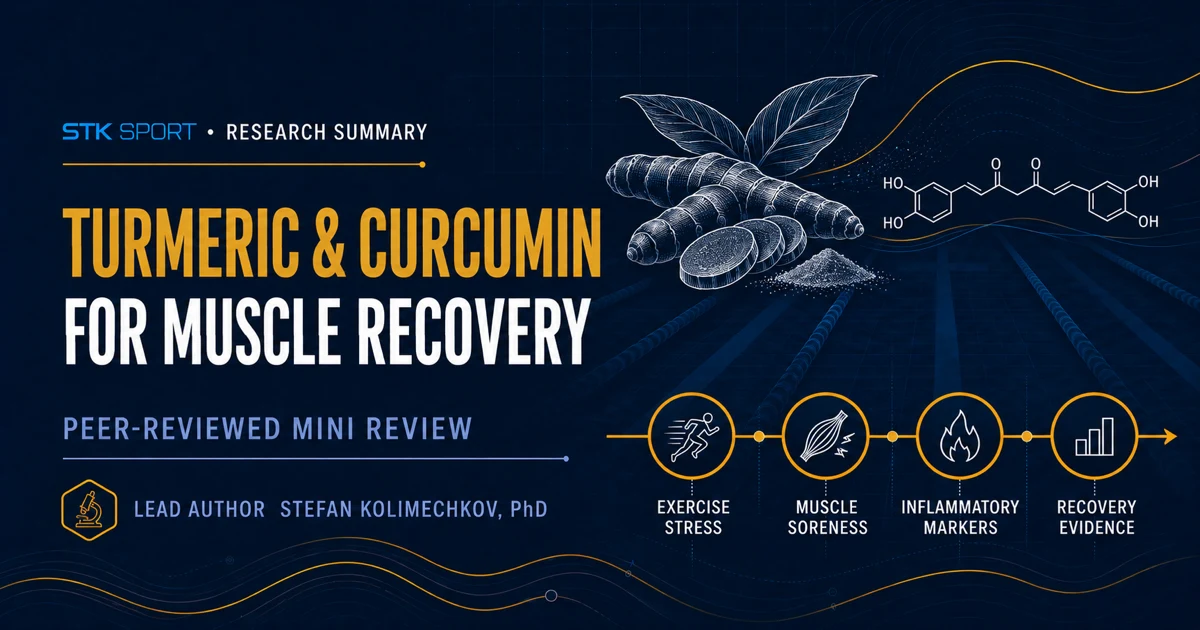
Could turmeric or curcumin support recovery after demanding exercise?
Turmeric contains many bioactive compounds, of which curcumin is the most widely researched. Exercise studies have examined whether curcumin-containing interventions may influence delayed-onset muscle soreness, biochemical markers of muscle damage and inflammation, and the restoration of physical function.
This mini review brought that literature together for a sports audience, while also discussing bioavailability, formulation differences and possible adverse effects.
What did the available research suggest about turmeric, curcumin and recovery from exercise-induced muscle damage?
A narrative review of laboratory and human exercise evidence.
The authors searched four research databases, screened titles and abstracts, obtained full manuscripts and synthesised the selected literature descriptively.
This was a narrative mini review rather than a systematic review or meta-analysis. It did not pool effect sizes or formally grade the certainty of evidence.
- SearchPubMed, Web of Science, EMBASE and Google Scholar
- ScreenEnglish-language journal articles and clinical reports considered
- VerifyFull manuscripts obtained to confirm relevance to turmeric
- SynthesiseFindings described across soreness, biomarkers and muscle function
Soreness and pain
Human studies involving eccentric exercise, endurance cycling, running and competition were examined for changes in delayed-onset muscle soreness and pain.
Damage and inflammation markers
The review considered creatine kinase, myoglobin, inflammatory responses and related markers used in exercise-recovery research.
Range of motion and strength
Evidence concerning range of motion, maximal voluntary contraction and recovery of muscle function was discussed alongside formulation and timing differences.
Promising recovery signals, but not a uniform result.
Several human trials reported reductions in soreness, pain or selected muscle-damage and inflammatory markers, while other outcomes were unchanged or inconsistent.
Muscle soreness was often reduced
Multiple placebo-controlled exercise studies discussed in the review reported less pain or delayed-onset muscle soreness following curcumin-containing interventions.
Some damage and inflammation markers improved
Selected studies reported lower myoglobin, creatine kinase activity or inflammatory responses after demanding exercise, although the measured outcomes differed between trials.
Not every outcome changed
The review noted a cycling study without statistically significant between-group findings and a rugby trial in which some, but not all, aspects of muscle damage were reduced.
Strength and range-of-motion results varied
Studies reported different patterns for maximal voluntary contraction and range of motion, with outcomes influenced by when supplementation was taken and when testing occurred.
Formulations and protocols were highly diverse
Trials used different curcumin or turmeric extracts, doses, delivery systems, exercise models, supplementation periods and participant groups, limiting direct comparison.
Generally tolerated, with important cautions
The review described curcumin as generally well tolerated while noting possible gastrointestinal symptoms and the need for caution with anticoagulant or non-steroidal medication.
A plausible recovery aid that still requires individual and evidence-based judgement.
The review supports continued interest in turmeric and curcumin for exercise recovery, particularly soreness and selected biological markers. The evidence is encouraging rather than definitive.
A potential adjunct, not the foundation of recovery
Curcumin-containing interventions may be relevant when athletes and qualified professionals consider recovery strategies. Training design, sleep, nutrition and appropriate clinical advice remain the essential context.
Narrative synthesis with varied source studies
- Only English-language journal articles and clinical reports were included.
- Relevant papers may have been missed despite searching four databases.
- No formal risk-of-bias assessment, pooled analysis or certainty rating was reported.
- Interventions and outcomes differed substantially across the underlying studies.
No universal supplement prescription
- It does not prove that turmeric or curcumin guarantees faster recovery or better performance.
- It does not show that culinary turmeric is equivalent to every concentrated research formulation.
- It does not replace individual medical or nutritional advice, particularly where medication is involved.
Read and cite the paper.
Use the DOI for the permanent scholarly record or read the complete article hosted on STK SPORT.
Kolimechkov, S., Douglas, D., Izov, N., Alexandrova, A., & Petrov, L. (2022). The effect of turmeric and its compound curcumin on muscle recovery in athletes: Mini review. Kinesiologia Slovenica, 28(1), 83–95. https://doi.org/10.52165/kinsi.28.1.83-95