
Physical fitness assessment in children and adolescents: a systematic review
European Journal of Physical Education and Sport Science, 3(4), 65–78
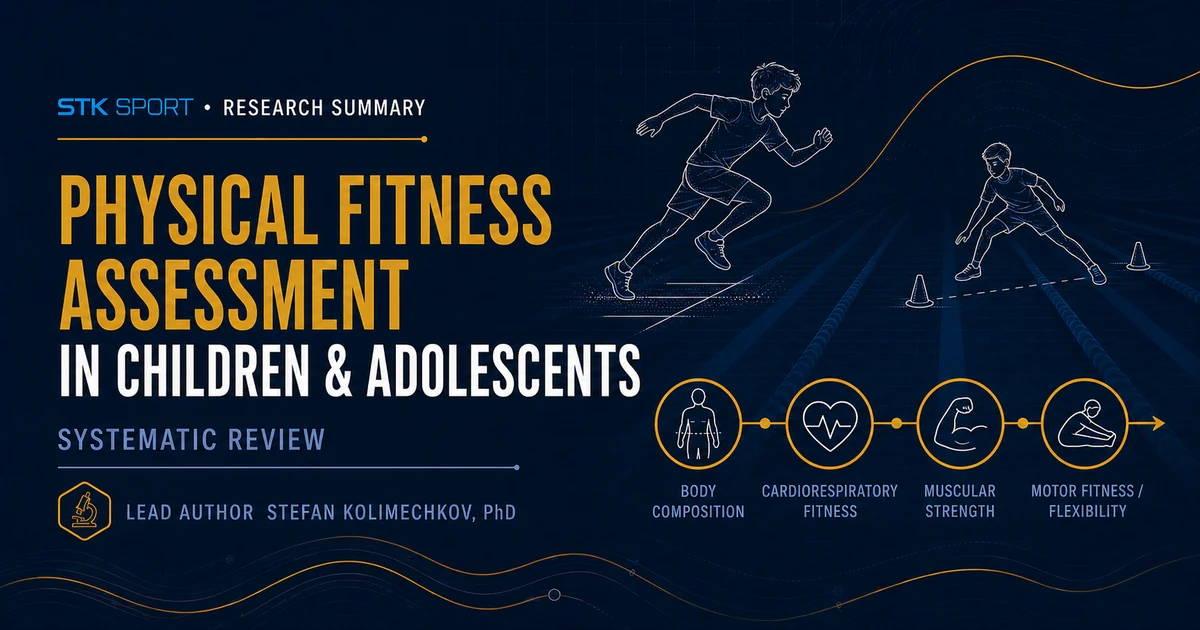
Measuring fitness means choosing the right set of tests.
Physical activity describes behaviour; physical fitness describes measurable capabilities and characteristics. Laboratory assessment can be precise, but it is often too expensive, time-consuming or specialist for use across whole schools and large groups.
Field-based test batteries offer a practical alternative, but they differ in age range, components, equipment, time and intended setting. This review brought the principal systems together to help readers understand those differences.
Which field-based test batteries can assess health-related physical fitness in children and adolescents, and how should a suitable battery be selected?
A structured comparison of youth fitness assessment.
The article synthesised published literature on field-based health-related physical fitness tests and test batteries for children and adolescents.
This was a literature review. It did not recruit participants, administer a new fitness test battery or report new statistical comparisons.
What needs to be assessed
The review considered body composition, cardiorespiratory fitness, musculoskeletal fitness, motor fitness and flexibility, including common field tests used for each domain.
More than fifteen batteries
The paper mapped test batteries used in different regions and age groups, from preschool assessment through childhood and adolescence.
Eurofit, FitnessGram and Alpha-fit
The three widely applied systems were compared by their included components and tests, with PREFIT discussed as the age-specific option for children aged three to five.
No single test battery fits every age, setting and purpose.
The review identified the systems most widely used at the time of publication and emphasised matching the assessment to the children and the practical context.
Three batteries stood out
The review identified Eurofit, FitnessGram and Alpha-fit as the most widely applied field-based systems in the literature examined.
Regional use shaped the landscape
Eurofit had a long history across Europe, while FitnessGram was extensively implemented in the United States and elsewhere. Alpha-fit was developed to support comparable health-related assessment across Europe.
Alpha-fit aligned with core health domains
The review highlighted Alpha-fit’s focus on body composition, cardiorespiratory fitness and muscular fitness, with versions that could be selected according to available testing time.
PREFIT addressed the youngest age group
For children aged three to five, the paper identified PREFIT as the available age-specific battery, while noting that reliability was not equally established for every included test.
Time and facilities matter
Some batteries contain many tests and may be difficult to implement within limited school time. The review therefore connected scientific relevance with staffing, equipment and administration time.
Fitness is more than one score
Body composition, aerobic capacity, strength, motor fitness and flexibility describe different dimensions. A single measure cannot represent the complete physical-fitness profile of a child.
Choose a battery for the child, the purpose and the setting.
The review supports using standardised, age-appropriate field tests that cover the fitness domains relevant to the assessment question. Consistent protocols can help schools and researchers monitor change, but the results still require careful interpretation.
Design assessment deliberately
Schools and practitioners can compare the age range, health relevance, time, equipment and reporting system of each battery rather than selecting tests only because they are familiar or easy to administer.
What constrains the review
- The article does not report a reproducible database search, eligibility process or formal risk-of-bias assessment.
- The battery landscape and cited guidance reflect literature available up to 2017.
No universal or diagnostic battery
- The review does not establish one best battery for every child, country or school setting.
- Field fitness tests do not diagnose health conditions or replace appropriately qualified clinical assessment.
Read and cite the paper.
Use the verified journal record or read the complete open-access article.
Kolimechkov, S. (2017). Physical fitness assessment in children and adolescents: A systematic review. European Journal of Physical Education and Sport Science, 3(4), 65–78. DOI: 10.46827/ejpe.v0i0.653.